
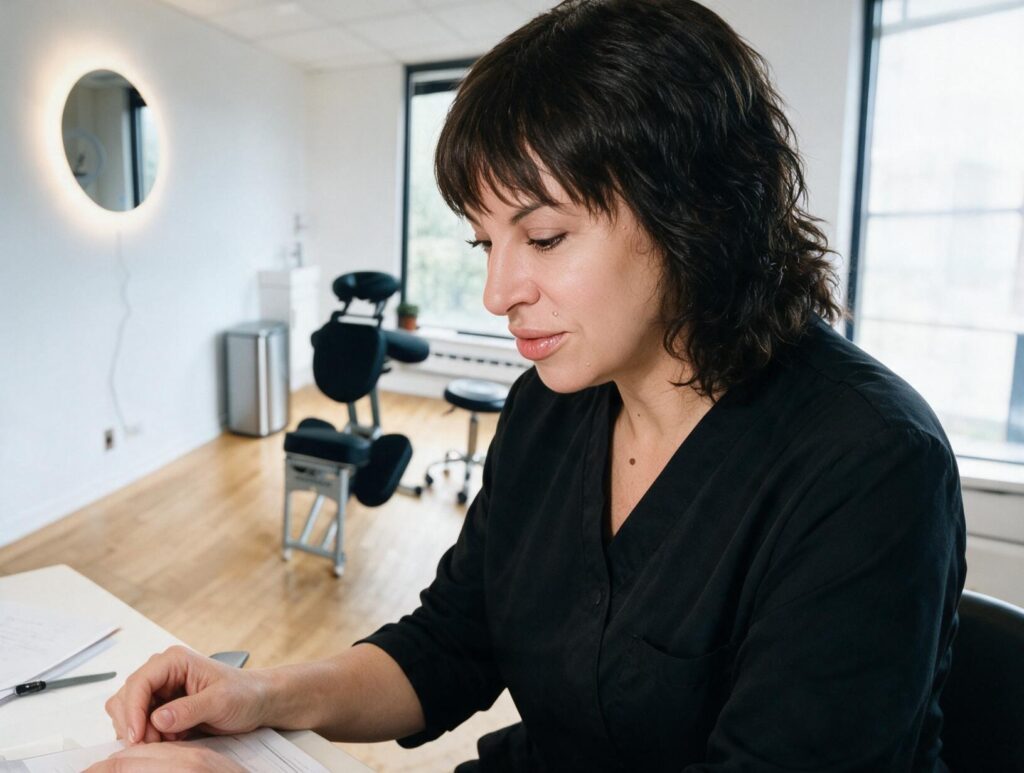
What experience do you have with density SMP?
I would begin by asking how much of the practitioner’s work involves SMP density treatments. Density work places pigment between existing hairs, so the aim is to reduce scalp show-through without creating a solid or painted appearance. It requires careful attention to your natural hair color, texture, thinning pattern and the way light reaches the scalp.
Ask to see healed examples of clients with a similar pattern of hair loss, hair color and skin tone. Fresh work can look darker and more defined than the settled result. I want prospective clients to study photographs taken after healing, including examples in ordinary indoor and daylight conditions. If your concern is female thinning, ask specifically for female density work. If you have male pattern thinning, ask to see male density examples rather than only shaved results.
You can also ask about the practitioner’s SMP-specific training, body art practitioner licence, bloodborne pathogens certification and county health permit. A clean, sterile studio, packaged needles opened in front of you and appropriate barrier protection are all reasonable points to discuss before proceeding.
How will you design the hairline and density pattern?
Hairline design is one of the most important questions to ask at an SMP consultation because an unsuitable hairline can make otherwise careful work look unnatural. Ask how the hairline will be chosen for your facial structure, age and existing hair pattern. For a shaved style, I look for a soft, irregular transition rather than a perfectly straight or overly low line. For density work, the front may need to blend gradually into the hair you still have.
Ask the practitioner to explain where pigment will be placed and how the density will vary across your scalp. Natural hair is not equally dense everywhere. The crown, parting, temples and frontal area may each need a different approach. A useful consultation should include marking or mapping the treatment area so you can see the proposed shape before treatment starts.
Ask how the result will look when your hair is longer, under bright light and as your natural hair changes. SMP does not grow hair or alter the underlying cause of hair loss. It creates a visual reduction in contrast between the scalp and your hair, so the plan should account for what your hair may look like between styling appointments.
What pigment will you use, and how will it be matched?
Ask how the pigment will be selected for your current hair color, not an imagined future color. The scalp, hair and skin undertones interact differently in different lighting, so matching requires more than choosing a pigment that looks close in a bottle. Gray, blonde, brown and black hair can each require a carefully considered tone.
You should also ask what type of pigment is used, how it is expected to settle and what happens if the color fades or needs adjustment. SMP is intended to be long lasting, although it gradually softens and may need maintenance in future. It can be removed with laser treatment, but removal is more involved when the original application has complications such as excessive depth, bleeding or unsuitable color.
I also recommend asking whether a small patch test is appropriate for you, particularly if you have allergies or a history of reactions. Tell the practitioner about every known allergy and relevant skin concern. If you have active eczema or psoriasis, or a history of keloid or spontaneous keloid scarring, discuss the risks with a dermatologist before booking.
How many sessions will I need?
Ask for a session-by-session outline rather than accepting a vague promise of completion in one appointment. Female SMP and male density treatments at Precision Scalp always take a minimum of three sessions, sometimes four. Pigment is built gradually so the practitioner can assess how your skin heals and refine the density without rushing the result.
Ask how long each appointment is expected to take, how sessions are spaced, and what will be reviewed before more pigment is added. You can also ask what happens if an area heals lighter than expected or if the density needs balancing. Good planning leaves room for controlled refinement instead of treating every scalp as though it will respond identically.
For an overview of preparation, read my guide to getting ready for your first density treatment. Before a session, the scalp should be clean, and the treatment area, color and hairline should be agreed before application. Numbing is used to help manage discomfort.
What result is realistic for my hair loss?
Ask the practitioner to describe the result in plain language. Density SMP can make thinning less noticeable, but it will not restore follicles, stop hair loss or create the appearance of a completely painted scalp. Some scalp showing through the hair is normal and helps the finish remain believable.
Bring photographs of how you usually wear your hair, but also be prepared to discuss your routine. Tell me whether you part your hair, use fibres, wear it longer, clip it short or expect your hair loss to progress. These details affect the design. I would rather adjust an unrealistic expectation at consultation than have you feel disappointed after treatment.
If your hair loss may be linked to hormones, illness or another medical condition, ask whether you should speak with your healthcare provider first. Before treating suspected female pattern hair loss, blood tests may be needed to exclude other diseases, metabolic conditions and hormone imbalances that can produce a different pattern.
What should I ask about healing and aftercare?
Ask for written aftercare instructions and a clear contact route if you have a concern. General aftercare includes keeping the scalp dry for the first several days, avoiding shampoo, sweating, heavy exercise, steam rooms and hot showers during the early healing period, and avoiding sun exposure. Do not pick scabs or interfere with the area outside the instructions you receive.
Color can look stronger at first and lighten as the scalp heals. Ask when gentle washing, regular grooming and scalp sunscreen can resume. Ask whether swimming pools should be avoided during the healing period. Long term, broad-spectrum sunscreen can help protect the pigment from sun-related fading.
Finally, ask what symptoms should prompt a call. Fever, pus or drainage, severe pain, severe redness or swelling require medical attention. Contact the practitioner about unusual discomfort or any healing change that goes beyond what was explained.
For clients considering treatment for hair loss from alopecia, my guide to SMP for alopecia explains the considerations in more detail. Precision Scalp is in Oak Brook, Illinois, and you can find the studio details on the contact page.
Bring this list to your appointment, write down the answers, and choose the plan that makes sense for your scalp rather than the one that sounds quickest. You are welcome to book a consultation if you would like to talk it through.
Frequently asked questions
Should I bring photographs to an SMP density consultation?
Yes. Bring photographs showing how you normally wear your hair, including your parting, styling and preferred length. They help explain what you want, but they should support rather than replace an in-person assessment. The practitioner still needs to evaluate your scalp, hair color, thinning pattern and how the proposed result will look in real lighting.
Can I ask to see results on someone with my hair color?
You can and should ask for examples that are relevant to you. Look for healed work on a similar hair color, skin tone, hair texture and thinning pattern. A portfolio made up only of shaved-head results may not show how well the practitioner handles pigment placement between existing hairs, which is central to density SMP.
What if my hair loss is still progressing?
Ask how ongoing changes could affect the design and whether the plan allows for future adjustments. SMP does not treat the cause of hair loss, so it is sensible to discuss any diagnosis or treatment plan with your healthcare provider. Your practitioner can then explain how the visible pattern may be managed cosmetically over time.
Can I wash my hair before a density consultation?
Arrive with your scalp reasonably clean and free from heavy styling products if possible, unless the practitioner gives different instructions. Clean hair makes it easier to assess the scalp and existing density. Before the actual treatment session, the scalp should be washed, while detailed aftercare instructions should come directly from your practitioner.
Is density SMP suitable if I use hair fibres?
It may be possible, but explain exactly how and when you use fibres. The practitioner needs to understand your normal styling routine and the level of scalp show-through you are trying to reduce. SMP can provide a visual camouflage between existing hairs, but it does not replace hair growth or guarantee that styling products will no longer be needed.
Should I ask about future touch-up appointments?
Yes. Ask how the pigment is expected to age, what signs indicate that maintenance may be useful and whether future appointments are planned as part of your long-term care. SMP is intended to last for years, but natural skin exfoliation, sun exposure, skin ageing and lifestyle can gradually affect its appearance.
What should I do if I feel nervous during the consultation?
Tell the practitioner. A consultation should give you time to ask questions, discuss boundaries and understand the plan without pressure. You can ask for the proposed hairline or treatment area to be mapped before committing. It is reasonable to take time to review healed examples and consider whether the result suits your daily life.