
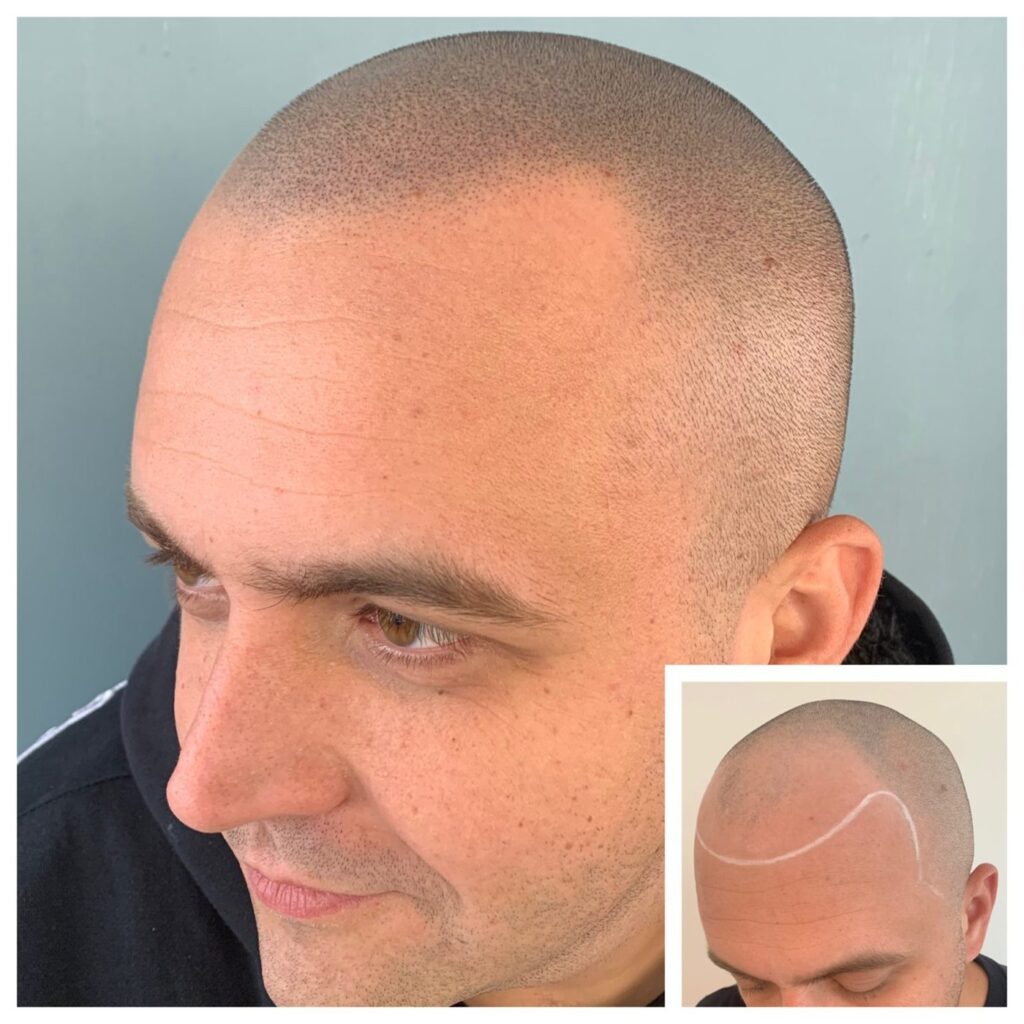
Prepare for scalp micropigmentation for thinning hair in men by arriving with a clean, healthy scalp, avoiding irritation and heavy sweating beforehand, and planning for healing after the appointment. Bring realistic expectations about gradual results: male density SMP requires at least three sessions, sometimes four. I will assess your hair pattern, choose a suitable pigment tone, and explain each step before treatment.
What should I do before my first male density SMP appointment?
My first recommendation is to keep your scalp calm and in its usual condition. Do not arrive with sunburn, a fresh chemical treatment, cuts, open skin, or significant irritation. If your scalp is inflamed or unusually sensitive, tell me before we begin so I can decide whether it is sensible to proceed.
Wash your hair and scalp as you normally would before the appointment, unless I have given you different instructions. Come without heavy styling products, oils, fibers or concealers. A clean scalp makes it easier for me to assess the areas of thinning and place the pigment accurately between your existing hairs.
Avoid anything that leaves the scalp tender. This includes vigorous scratching, aggressive exfoliation, and recent cosmetic procedures in the treatment area. If you use a prescribed scalp medication or have a skin condition, mention it during your consultation rather than stopping or changing treatment without medical advice.
It is also sensible to avoid planning a demanding workout, sauna visit, steam room, or swimming session immediately before your appointment. Heavy sweating and irritation are not helpful when the skin is about to be treated. Plan a quieter period after the session as well.
Should I cut or shave my hair before density SMP?
For male density SMP, you generally do not need to shave your hair. This service is designed for men who want to keep existing hair. I place pigment between the hairs to reduce the contrast between the scalp and the areas that have become thinner, rather than creating the appearance of a completely shaved head.
Please do not make a major haircut change just before we meet unless we have discussed it. Your current hair length helps me see your natural pattern, hair direction, scalp visibility, and the relationship between your existing hair and the thinning areas. If you normally wear your hair longer, arrive in the style you usually maintain.
The pigment color is selected to harmonize with your current follicle color. That does not mean choosing a generic dark shade. Hair color, skin tone, existing density, and your preferred hairstyle all matter. I work toward a result that supports your appearance as it is now, while considering how your hair may change over time.
You can read more about the approach on my SMP for thinning hair in men service page. It may also help you decide whether density work, rather than shaved-head treatment, matches what you want.

What should I discuss during the consultation?
Bring an honest description of what bothers you. Some men notice diffuse thinning across the crown, while others are most concerned with the hairline, temples, or the contrast created by fine hair. I want to understand how you wear your hair and what you hope will look different, not simply where you can see scalp in a photograph.
We will discuss the hairline carefully. In my experience, assessing a practitioner’s hairline work is one of the most important parts of choosing SMP, because an unsuitable or poorly proportioned hairline can make the overall finish look unnatural. Even with density treatment, the front edge needs to make sense with your age, facial proportions, existing hair, and pattern of loss.
Bring questions about:
- How your thinning pattern can be treated without making the scalp look overly uniform.
- What level of density is realistic for your existing hair.
- How the pigment tone will relate to your current hair color.
- How long each appointment takes and how the sessions will be spaced.
- What you should avoid while the scalp heals.
I also recommend looking at healed work, not only freshly completed photographs. Immediately after treatment, pigment can appear stronger than the eventual result. Healing allows the color and definition to settle, which is why a staged plan is important.
Why are several sessions needed?
Male density SMP is not completed in one sitting. It requires a minimum of three sessions, and sometimes a fourth is appropriate. The number depends on the degree of thinning, the amount of density you want, and how your skin responds to each layer.
Each appointment builds progressively. The first session establishes a foundation. Later sessions add and balance pigment where needed, while allowing me to assess how the previous work has healed. Trying to create the full result in one appointment would not give me the same control over tone, spacing, and natural variation.
Sessions are spaced several weeks apart so the skin can heal fully between layers, and I will confirm the timing for you. A session usually takes about two hours, though the exact time is confirmed at consultation. I use an anaesthetic during treatment, and I will explain what you are likely to feel and how to care for the scalp afterward.
It is useful to plan the whole series before beginning. Leave enough space in your diary for healing, and avoid booking the final session just before a vacation involving swimming or extensive sun exposure. The treatment plan should fit your lifestyle rather than forcing you to ignore the healing period.
What should I plan for after the appointment?
For the first four days after a session, keep water off the treated scalp. That means no washing over the area, swimming, sauna, steam room, or intense exercise that causes heavy sweating. You should also avoid scratching or picking at the skin if it feels textured while healing.
After day four, gentle washing with a mild, sulfate-free shampoo is generally appropriate. Sun exposure should be minimized during healing. Once the scalp has fully recovered, appropriate SPF helps protect the result. Swimming should wait until the healing period is complete, because chlorine and saltwater can interfere with settling pigment.
Before booking, consider your schedule, work commitments, exercise routine, and any upcoming travel. I practice from Precision Scalp in Oak Brook, Illinois, serving clients in the Chicago area, and I will give you instructions specific to your treatment. You can find the studio information and contact details here.
Scalp micropigmentation is intended to be permanent, although removal with laser treatment is possible later. Unlike a traditional tattoo, SMP places pigment in the epidermal and upper dermal layers to reduce noticeable spread. Good preparation cannot replace careful technique, but it gives the skin the best opportunity to heal predictably.
If you are considering male density SMP, you are welcome to review my SMP for men service before arranging a consultation.
If you would like to talk it through, you are welcome to book a consultation.
Frequently asked questions
Can I take medication before my first density SMP session?
Tell me about all prescribed medicines, supplements, and relevant medical conditions during your consultation. Do not stop prescribed medication on your own. I can advise whether we should proceed or ask you to seek guidance from your doctor before treatment, particularly if your scalp is irritated or healing may be affected.
Should I have a patch test before male density SMP?
Ask me about a small patch test on an inconspicuous area before full treatment, particularly if you have a history of pigment or cosmetic reactions. Patch testing helps identify an unexpected sensitivity, although reactions to the carbon-based pigment commonly used for SMP are considered uncommon.
Can male density SMP cover a hair transplant scar?
SMP can be used to reduce the visual impact of some scars, including hair transplant scars, burns, or other marks on the head. Whether it is suitable depends on the scar’s condition, texture, color, and location. I would assess the area directly rather than promise coverage from photographs alone.
Will male density SMP stop my natural hair loss?
No. SMP changes the visual contrast between your scalp and existing hair, but it does not stop the biological process causing hair loss or create new follicles. During consultation, I can discuss how your current thinning pattern affects the design and whether the treatment should be adjusted as your hair changes.
Can I choose a very dark pigment to make my hair look thicker?
The shade should be chosen to work with your current follicle color, not simply made as dark as possible. Excessively strong contrast can look less natural and may not suit your skin or existing hair. I assess tone, spacing, and overall balance before selecting the pigment.