
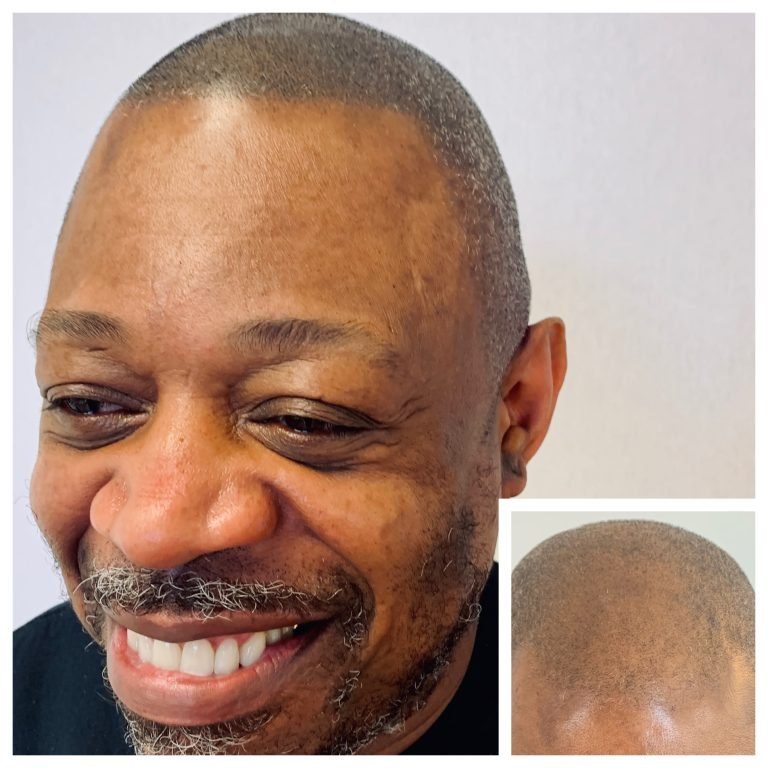
What does hair density actually mean?
Hair density is the amount of hair growing within a particular area of scalp. It is different from hair thickness, which describes the diameter of each individual strand. You may have fine hair with a reasonable number of follicles, or thicker hair with fewer follicles that still appears full.
When men search for how to check hair density male, they are often trying to answer a practical question: is my hair genuinely becoming sparser, or am I noticing normal scalp show-through? Density can look different depending on hair length, styling, wetness, lighting, and the natural direction of growth.
A useful home check should therefore compare like with like. It is not a medical diagnosis and cannot identify whether thinning is caused by male pattern hair loss, an inflammatory scalp condition, medication, nutritional problems, or another factor.
How do I perform a hair density test at home?
Start with clean, dry hair and a clean, dry scalp. Avoid judging density immediately after applying heavy styling products or oil. Use a bright room with indirect daylight if possible.
Take clear photographs of the front hairline, temples, mid-scalp, crown, and top of the head. Keep the camera at the same distance and angle each time. A second person can help, or you can use a phone stand so the images are more consistent.
For a simple hair density test male, record:
- How much scalp is visible between existing hairs.
- Whether the crown or parting looks wider than before.
- Whether the temples appear to be receding.
- Whether the hair looks finer in one region.
- How much hair you notice in the shower, on your pillow, or in your brush.
Keep the photographs private and label them with the date. Reviewing images over time is more useful than inspecting your scalp repeatedly in the mirror, since day-to-day changes in styling and light can be misleading.
What signs suggest lower density?
Visible scalp through the crown, a widening central area, or a changing hairline can suggest reduced density. Another sign is a difference between the thickness of hair at the sides and the hair on top. Compare areas cautiously, however, because hair naturally grows in different directions and the crown often has a whorl.
Look for a consistent pattern rather than one unflattering photograph. If the same area shows more scalp under similar conditions over several months, it is worth discussing with a qualified healthcare professional or hair-loss specialist. Sudden shedding, patchy loss, redness, scaling, pain, or itching deserves professional attention rather than a cosmetic density assessment alone.
Do not rely only on counting hairs. Home counting is difficult to perform accurately and can create false confidence. The more useful question is whether the visual contrast between your hair and scalp is increasing, and whether the change is stable or progressing.
Can I check whether I might suit male density SMP?
Male density SMP is designed for thinning areas where some hair remains. Tiny pigment impressions are placed between existing hairs to reduce the contrast between scalp and hair. The treatment creates the appearance of fuller density, but it does not grow hair, change natural hair growth, or treat the cause of hair loss.
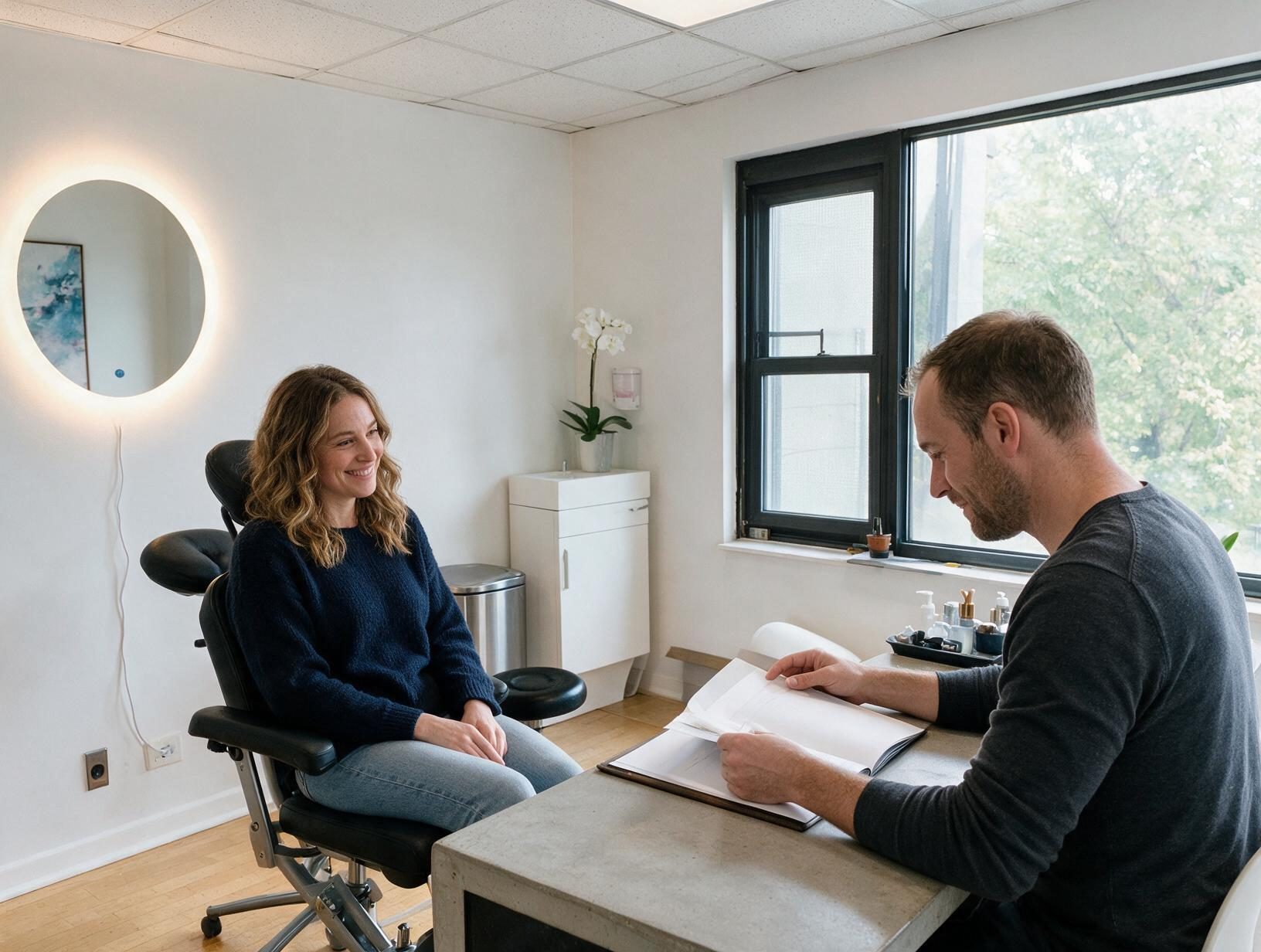
In my consultations, I look at the pattern of thinning, the amount and color of remaining hair, scalp condition, lifestyle, and what result you are expecting. Density work is not the same as a fully shaved-head SMP treatment. The pigment must be restrained enough to blend with living hair rather than overpower it.
For a realistic idea of candidacy, you can read my guide to male density SMP candidacy and contraindications. I also explain how placement and density vary in my guide to SMP density techniques for thinning hair.
Male density work requires a minimum of three sessions, and sometimes four. Building the result gradually gives the pigment time to settle and allows me to adjust coverage rather than applying too much contrast at once. Some visible scalp showing through the hair remains normal. The aim is a believable impression of density, not a solidly painted scalp.
What should I check before booking an assessment?
Review healed examples, not only photographs taken immediately after treatment. Fresh pigment can look darker or more prominent before the scalp settles. Ask to see work involving a similar level of thinning, hair color, hair length, and skin tone to your own.
Pay particular attention to the hairline. A hairline that is too straight, too low, too dark, or too uniform can make otherwise careful work look unnatural. For clients with existing hair, the front should blend with the surrounding follicles rather than appear as a separate block.
Before treatment, disclose allergies, skin conditions, medication, and any history of keloid or spontaneous keloid scarring. Active eczema or psoriasis, or a scalp condition that has not been assessed, may need discussion with a dermatologist first. A responsible consultation should cover your health history, expectations, hair pattern, and the technique being proposed.
Ask whether the practitioner has SMP-specific training, a body art practitioner license, bloodborne pathogens certification, and the relevant local health permissions. The studio should be clean, sterile equipment should be handled appropriately, and packaged needles should be opened in front of you. These details matter because SMP is a cosmetic tattoo procedure.
What happens after a density SMP session?
Numbing is used during treatment. Afterward, follow the practitioner’s written instructions carefully. General editorial guidance is to keep the scalp dry, avoid shampooing, shaving, heavy exercise, saunas, steam rooms, and sweating during the early healing period. Avoid picking or scratching as the color settles and lightens.
For days five through ten, gentle washing may be introduced according to your practitioner’s instructions, with sun exposure still avoided. From around day ten, normal grooming and scalp SPF can usually resume when the skin has settled. Swimming pools should be avoided for 28 days, and full healing takes approximately thirty days.
Contact your practitioner if you have unusual discomfort or a healing concern beyond what was discussed. Contact a healthcare provider for fever, pus or drainage, severe pain, marked redness, or significant swelling, as these can indicate infection.
Precision Scalp is in Oak Brook, Illinois. If you want to discuss what your photographs show, you can contact Precision Scalp for studio details and a consultation.
If you would like to talk it through, you are welcome to book a consultation.
Frequently asked questions
Can hair density change from one day to the next?
Yes. Hair can appear fuller or thinner depending on washing, humidity, styling, oil, sweat, and how it lies. That is why I recommend comparing dated photographs taken with dry hair, similar lighting, and the same camera angle. A single mirror check is not a reliable measure of a lasting density change.
Should I wet my hair when checking density?
You can inspect wet hair, but do not compare wet photographs with dry photographs. Water groups strands together and usually makes more scalp visible. For the clearest comparison, use clean, fully dry hair without fibers or styling products, then repeat those conditions whenever you document your scalp.
Can I count the number of hairs in one square inch?
You can try, but home counting is rarely accurate because hairs overlap, grow at different angles, and are difficult to separate without specialist equipment. Photographs and consistent observations are more practical for most people. A professional assessment can interpret pattern, strand thickness, and scalp visibility together.
Does a receding hairline always mean I need treatment?
No. Hairlines naturally mature, and a change does not automatically mean you need a cosmetic procedure. The important points are whether the change is continuing, whether you have other symptoms, and what outcome you want. If loss is sudden, patchy, painful, or inflamed, seek medical assessment first.
Can hair fibers make my density look better during the check?
Yes. Fibers, powders, sprays, and concealers can temporarily reduce visible scalp and make comparison unreliable. If you use them, document that clearly and take a separate photograph without them. For an honest baseline, examine clean, dry hair before applying any product that changes the appearance of coverage.
Will male density SMP work if I keep my hair longer?
It can be considered when thinning hair remains in the treatment area, but the approach differs from a shaved-head treatment. The pigment must blend between your existing strands and match their visual weight. Your hair length, contrast, remaining density, and styling habits should all be reviewed during consultation.