
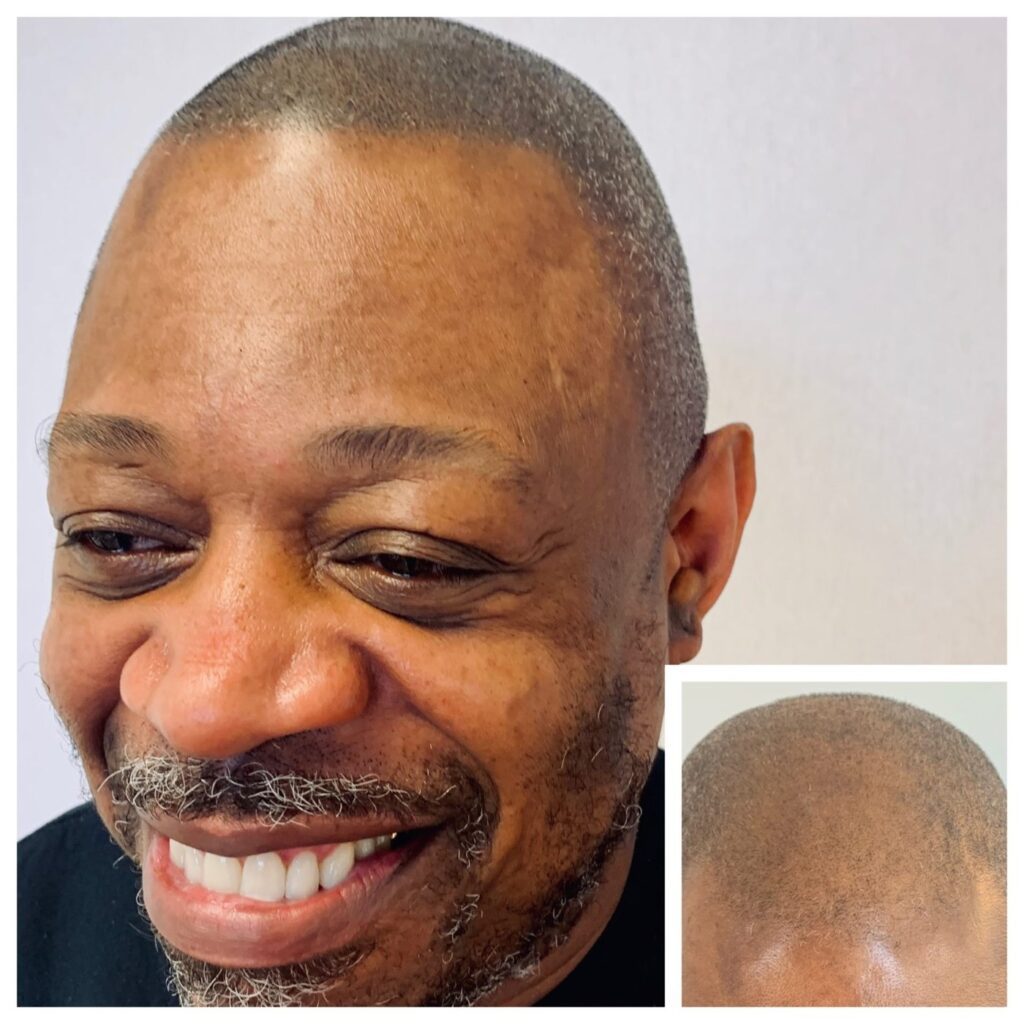
What does a hair tattoo actually create?
When people ask me about a hair tattoo, they are usually considering scalp micropigmentation, or SMP. I use tiny deposits of cosmetic pigment to create the visual impression of closely cut follicles. The result reduces the contrast between the scalp and surrounding hair. It does not grow hair, alter natural growth or damage existing follicles.
SMP is different from a decorative tattoo across the head. The pigment is placed more superficially, in the epidermal and upper dermal layers, and the pattern is built from carefully spaced impressions. The aim is usually a believable follicle effect, not a solid painted surface.
Some scalp showing through is normal. I set that expectation during consultation because a realistic result should still look like scalp with hair, rather than an artificially dense cap of color. The pigment is selected to complement your current hair follicle color, whether your hair is white, blonde, brown or black.
You can read more about how SMP creates the look of fuller hair before deciding whether the approach fits your goals.
Which scalp styles are available?
The most familiar option is a closely shaved look. This suits someone with advanced hair loss who wants the appearance of an even, freshly clipped head. I can shape the front edge so it works with your age, facial structure and natural proportions. A hairline should not look stamped on, overly straight or too low.
A second option is density work between existing hairs. This is often considered by people with thinning at the crown, diffuse thinning or a visible scalp under dark hair. The pigment sits between the hairs to reduce show-through. It does not replace hair, but it can make the overall contrast appear softer when your hair is worn at a suitable length.
A softened receding hairline is another possibility. Rather than creating a dramatic new outline, I can work with the shape you have and make the transition look more consistent. For some clients, a conservative hairline looks more natural as it continues to suit them over time.
Scalp micropigmentation can also camouflage selected scars. This may include donor-area scarring after a hair transplant, trauma marks or other healed scalp irregularities. Scar tissue can hold pigment differently from ordinary skin, so I assess its condition, color and texture carefully before discussing what is realistic.
Alopecia-related loss may call for a broader hair tattoo design. SMP can be considered for alopecia areata, scarring alopecia and other patterns of hair loss, but the scalp needs individual assessment. My scalp micropigmentation information for alopecia explains that restorative planning is different when the hair loss pattern or scalp condition is medically complex.

How do I choose the right head hair tattoo style?
I start with the pattern of loss, the hair you still have and how you normally groom it. Someone keeping fine stubble may need a different blend from someone choosing a fully shaved appearance. If hair remains in the treated area, a fine stubble length, maintained with clippers or a trimmer, can help the natural hair and pigment sit together visually.
We also discuss your preferred hairline. For a fully bald client, I consider facial structure and age rather than copying a youthful, very low hairline. For thinning hair, I look at the existing outline and how the density changes across the scalp. The most important examples to review from any practitioner are healed hairlines, not only freshly completed work.
Skin type, lifestyle and expectations matter as well. Sun exposure, skin ageing, skin oiliness and other factors can influence how pigment settles and fades. If you have active eczema or psoriasis, or a history of keloid or spontaneous keloid scarring, speak with a dermatologist before booking. SMP is camouflage, not a diagnosis or treatment for the underlying cause of hair loss.
For suspected female pattern hair loss, I also recommend arranging appropriate blood tests through a healthcare professional to exclude other conditions, metabolic causes or hormone imbalances that can produce a similar pattern. Female density work is designed differently from a shaved-head style because diffuse thinning commonly preserves the frontal hairline.
What happens before and during the treatment?
Before a session, wash your hair and scalp. At the appointment, I mark the treatment area, discuss and agree the hairline, match the pigment, and use numbing medicine. I work gradually, checking the pattern rather than treating the scalp as one uniform block.
Female SMP and male density always require a minimum of three sessions, and sometimes four. Other treatment plans vary according to the area, skin, hair loss pattern and whether scar tissue is involved. I explain the plan at consultation rather than promising a fixed outcome for every person.
When choosing a practitioner, ask to see healed work and check SMP-specific training, body art licensing, bloodborne pathogens certification and relevant local health permissions. A clean studio, packaged needles opened in front of you, gloves, mask, barrier protection and clear allergy questions are sensible safety points. A small patch test may also be discussed, particularly if you have a history of reactions.
How should I look after a scalp tattoo?
This is general editorial aftercare information, so follow the specific instructions you receive for your scalp. For days one to four, avoid water, shampoo, sweating and shaving on the treated area. A shower cap can help keep the scalp dry. Avoid heavy exercise, steam rooms and hot showers.
From days five to ten, gentle washing may usually resume according to your practitioner’s guidance. Avoid direct sun while the skin settles. From around day ten, normal grooming and broad-spectrum sunscreen can be resumed when advised. Avoid swimming pools for the healing period, and remember that full healing takes approximately 30 days.
Lightening during healing can be normal, and you should not pick scabs or interfere with the area. Longer term, sunscreen helps protect the pigment. Contact your practitioner about unusual redness, warmth, swelling, discomfort or any concern beyond what was explained. Seek healthcare advice for fever, pus or drainage, severe pain, severe redness or significant swelling.
I work from Precision Scalp in Oak Brook, Illinois, serving clients from the Chicago area. You can contact Precision Scalp for studio details and a consultation when you are ready to discuss your own scalp pattern.
If you would like to explore which style could look natural for you, I am happy to talk it through at a consultation.
Frequently asked questions
Can a hair tattoo cover a receding hairline without making it look lower?
Yes, the design can follow a conservative, age-appropriate outline rather than creating a low or sharply defined hairline. I assess your facial proportions, existing hairline and preferred grooming style. The goal is a gradual transition that complements your features, not a fixed shape that looks separate from the rest of the scalp.
Can SMP be used if I keep my hair longer?
It can sometimes be used between existing hairs to reduce visible scalp, particularly at the crown or in areas of diffuse thinning. The result depends on your remaining hair, contrast, skin and hairstyle. SMP is not a substitute for hair, so we discuss how you normally wear and maintain your hair.
Will a scalp tattoo work with gray or white hair?
SMP can be considered for gray or white hair, but pigment selection and blending need careful attention. The correct shade is based on the appearance of the follicles and surrounding hair, not simply on choosing a dark color. I assess your natural hair, scalp and desired finish during consultation.
Can I have SMP over a hair transplant scar?
Healed transplant scars may sometimes be camouflaged with SMP. Scar tissue can accept pigment differently from ordinary scalp, and the final appearance depends on its color, texture, width and stability. I need to assess the scar in person and explain what level of blending is realistic before treatment.
Does the shaved style require me to shave every day?
Not necessarily, but the best grooming length depends on how your natural hair blends with the follicle impressions. Many clients with remaining hair maintain fine stubble with clippers or a trimmer every few days. Clients with more advanced loss may prefer a fully shaved look using a razor, rotary or foil shaver.
Is a scalp hair tattoo permanent?
SMP is intended to be a long-lasting cosmetic tattoo, but it gradually fades as skin ages and naturally exfoliates. Sun exposure and individual skin factors can affect longevity. Touch-ups may eventually be appropriate. Laser removal is possible, although removal is more complicated when the original pigment was placed incorrectly.
Can SMP hide every type of alopecia?
SMP may camouflage some forms of alopecia, but suitability depends on whether the condition is active, the scalp’s condition, the pattern of loss and the presence of scarring. It does not treat alopecia or stimulate regrowth. A careful consultation, and medical input where appropriate, is important before proceeding.