
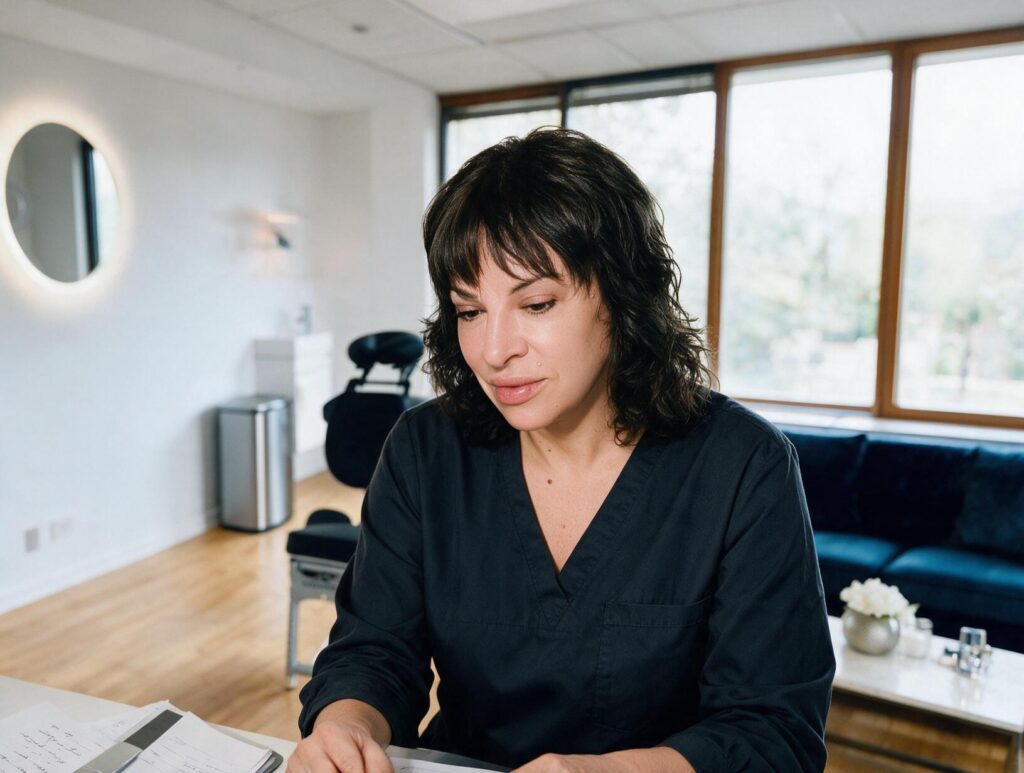
What does a hair tattoo actually do?
When people ask me about a tattoo for hair, they are usually asking about scalp micropigmentation, or SMP. It is a non-surgical cosmetic tattoo treatment that creates the visual impression of closely shaved follicles or fuller hair.
I use a fine needle to place carefully selected pigment into the epidermal and upper dermal layers of the scalp. Each impression is small, and the overall result comes from the pattern, spacing, color and density of many individual dots. The pigment is chosen to relate to your current hair follicle color, rather than simply matching your skin.
SMP can be used over a shaved scalp, between existing hairs to reduce scalp show-through, or around a scar. It may help with male pattern hair loss, diffuse female thinning, alopecia, chemotherapy-related hair loss, transplant scarring and other scalp scars. I also offer scalp micropigmentation for alopecia.
The important limitation is that this is camouflage, not hair restoration. It does not grow hair, alter natural hair growth or repair the underlying cause of hair loss. It creates a controlled visual shadow that can make the hair look more even and the scalp less noticeable.
How is the treatment planned?
I begin with a consultation rather than starting with the needle. We discuss your hair-loss pattern, skin, lifestyle, medical history, preferred hairstyle and expectations. If female pattern hair loss is suspected, it is sensible to arrange medical blood tests first, because hormonal, metabolic and other health conditions can produce similar-looking thinning.
For someone with a fully shaved look, I assess the face, age and natural proportions before agreeing a hairline. A hairline should not be a straight, identical band across the forehead. It needs a soft, appropriate irregularity and a shape that belongs to your features. This is one reason I encourage prospective clients to assess a practitioner’s healed hairline work, not only freshly completed photographs.
Before treatment, I mark the areas so we can review the proposed design together. I then match the pigment and apply numbing medicine. If there is a concern about pigment sensitivity, we can discuss it before the full procedure. Please tell me about every known allergy and any relevant skin condition.
At Precision Scalp in Oak Brook, Illinois, I approach the work with the same attention to proportion, tone and visual balance that shaped my years as a makeup artist and photographer. I trained in Los Angeles in SMP, and my earlier print and film work taught me to look closely at how light, shadow and scale affect what the eye sees.
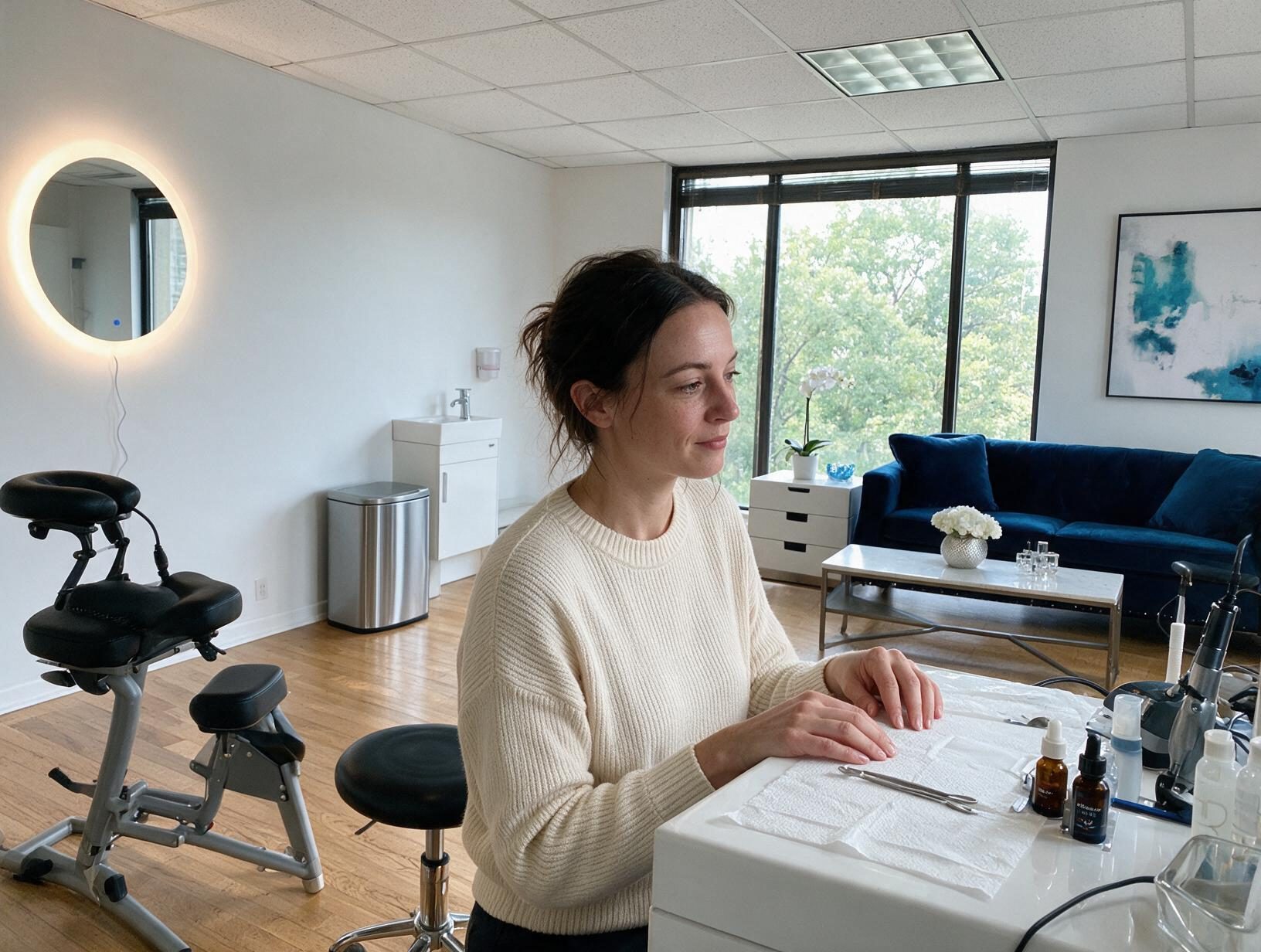
How many sessions does SMP need?
A full course is usually built over several appointments, allowing the pigment to settle before I decide what the next layer needs. The exact plan depends on the area, your existing hair, skin and the result we are working toward.
Female SMP and male density always take a minimum of three sessions, sometimes four. Density work needs particular restraint. The aim is not to paint the scalp solidly. I build the appearance gradually so some visible scalp remains, as it would with real hair.
For clients with existing hair, I consider its length and direction. A fine stubble length, maintained with clippers or a trimmer every few days, often blends the impressions naturally. With more advanced hair loss, a fully shaved look may be the most consistent option. These choices are part of the consultation, not something you need to decide alone.
What should I expect during healing?
The scalp can look darker or more intense immediately after an appointment. Mild flaking or light scabbing may occur as the area heals, and the color can appear to lighten during this process. Do not pick, scratch or interfere with the scalp outside the aftercare instructions I provide.
As general informational guidance, keep the scalp dry during days one through four. Avoid shampooing, shaving, sweating, heavy exercise, steam rooms and hot showers that make you perspire. From days five through ten, gentle washing can resume as advised, while direct sun exposure should still be avoided. From around day ten, normal grooming and sunscreen can resume, but swimming pools should be avoided for 28 days. Full healing takes approximately 30 days.
During the healing period, a petrolatum-based moisturizer such as Aquaphor or Vaseline may be recommended twice daily to help prevent scab formation. Long term, sunscreen helps protect the pigment from ultraviolet fading. Your own aftercare plan takes priority because skin response varies.
Contact me about unusual healing concerns. If you develop fever, pus or drainage, severe pain, marked redness or swelling, contact your healthcare provider, as these can indicate infection.
How natural and permanent is a hair tattoo?
A well-planned result should read as a collection of follicle impressions, not as a painted surface. That depends on conservative hairline design, accurate pigment selection, appropriate depth and careful spacing. Poor placement can blur, spread or create an overly hard hairline, so reviewing healed examples is more useful than judging only immediate results.
SMP is intended to be long lasting, but it is not unchanged forever. Natural skin exfoliation, sun exposure, skin aging and individual biology gradually affect the appearance. Results gradually change over time, and the timing of any refresh varies from person to person. I explain the longer-term picture in my guide to what to expect over the years.
Although the treatment is intended as permanent cosmetic work, laser removal is possible if someone later wants the pigment removed or substantially lightened. Removal can be more complicated when the original work was placed incorrectly, which is why choosing an experienced SMP professional matters from the beginning.
How do I choose an SMP practitioner?
Look for SMP-specific training, a body art practitioner license, bloodborne pathogens certification, appropriate county health approval and a clean, hygienic studio. You should be able to ask about packaged needles, barrier protection and the pigments being used.
Most importantly, review healed work in different lighting. Look closely at hairlines, temples, crowns, density work and scar camouflage. Ask how the practitioner handles your particular pattern instead of assuming one design suits everyone. My guide to choosing a local SMP provider covers the questions I recommend asking.
If you have a history of keloid or spontaneous keloid scarring, or active eczema or psoriasis, speak with a dermatologist before booking. A professional consultation gives us the chance to assess suitability honestly and create a plan that fits your scalp and expectations.
If you would like to discuss your pattern and options, you can contact Precision Scalp in Oak Brook to arrange a consultation.
Frequently asked questions
Is a hair tattoo the same as a regular tattoo?
They are both forms of tattooing, but SMP is designed specifically for the scalp. It uses cosmetic pigments, fine needle impressions and follicle-like spacing rather than the heavier lines or artwork associated with a conventional body tattoo. Placement depth, color choice and density all need to be controlled for a natural scalp result.
Can SMP cover a receding hairline without shaving?
Sometimes. SMP can be placed between existing hairs to reduce visible scalp and add the impression of density. The best approach depends on the contrast between your hair and scalp, the length you keep your hair, and how advanced the recession is. I assess this during consultation rather than assuming one style will suit everyone.
Does a hair tattoo hurt?
Yes, you may feel some discomfort, but it is usually limited, and I use numbing medicine during treatment. Sensitivity varies with the person and the area being treated. We can discuss how you respond to procedures, any relevant medication and what you can reasonably expect before the first session.
Can SMP be used over a scalp scar?
It can be considered for some scalp scars, including certain transplant, surgical or trauma scars. The scar must be assessed first because scar tissue can accept pigment differently from normal scalp skin. I look at its maturity, texture, color and location before recommending a suitable approach or explaining its limitations.
Can I have SMP if I have alopecia?
Some people with alopecia may be suitable, but the pattern, activity and type of alopecia matter. SMP does not treat the condition or stop future changes. A consultation should address whether the loss is stable, how the pigment may blend with the surrounding area and what expectations are realistic.
What happens if my SMP becomes too dark or changes color?
Color can change or appear uneven because of pigment choice, placement, sun exposure, skin response or the way the work has healed. I first assess whether correction is possible. In some cases, laser removal or lightening is considered, and that should be carried out only by a suitably qualified, experienced professional.
Can I still use hair-loss medication after SMP?
That depends on the medication and your individual health circumstances, so it is a question for the clinician who prescribed it and your SMP practitioner. SMP can be used alongside some hair-loss approaches, but it does not replace medical assessment or treat the mechanism causing your hair loss.