
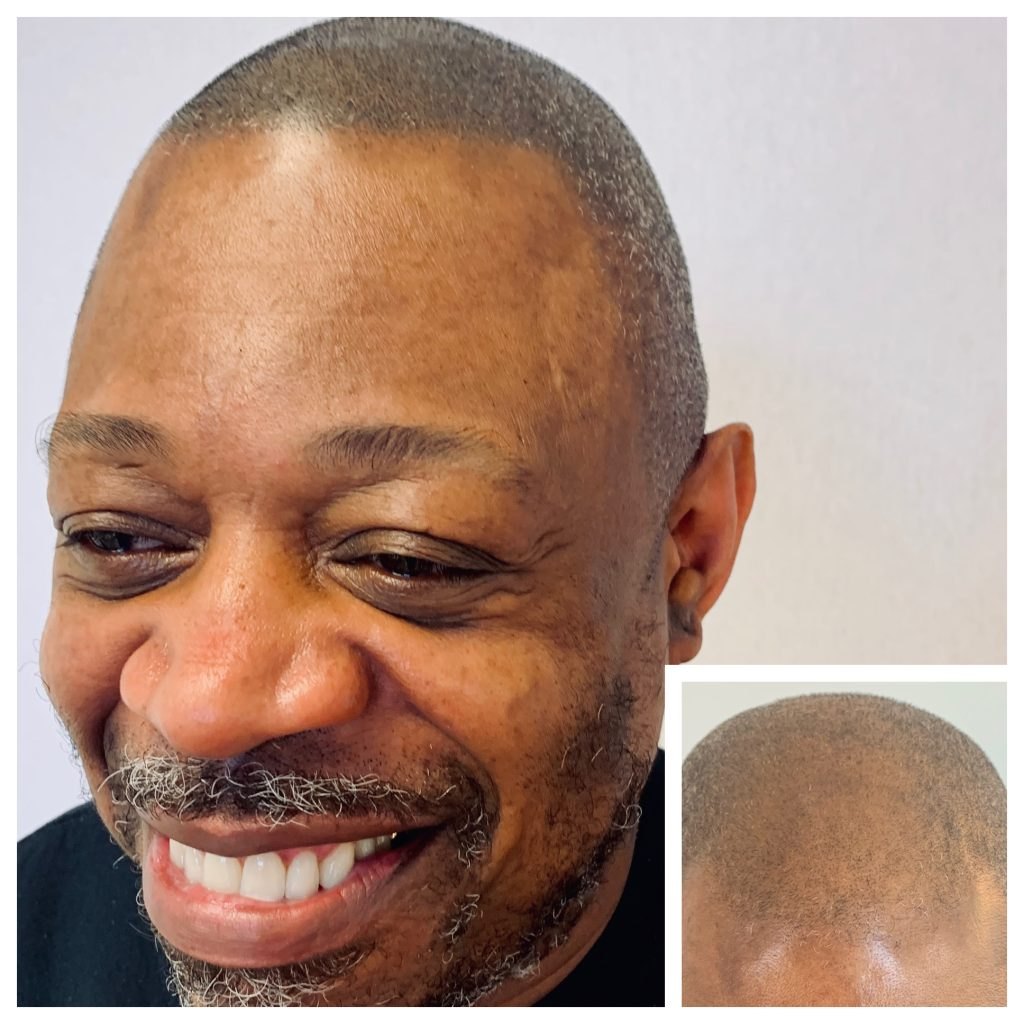
Yes, SMP density can look natural with existing hair when the pigment color, dot placement, density and hairline are planned around your own follicles. The aim is to reduce visible scalp show through, not create a solid painted effect. Some scalp showing remains normal and helps the result look believable.
How does SMP density blend with thinning hair?
When I carry out male density SMP or female density work, I place pigment between and beneath the hairs you already have. The pigment creates the visual impression of additional follicles, reducing the contrast between your scalp and your natural hair.
This is different from designing a fully shaved head. Your existing hair remains part of the result, so I consider its color, thickness, direction, length and pattern of thinning. The treatment does not grow hair, alter your follicles or change how your hair grows. It is a camouflage treatment that creates the appearance of fuller coverage.
For many people, the most natural result is not the darkest or densest result. A little scalp showing through is expected. If the scalp were covered too heavily, the finish could look flat or painted, especially when viewed in strong light.
If you are considering treatment for female thinning, you can read more about Scalp Micropigmentation for Women. Female hair loss often has a diffuse pattern, so the treatment needs to follow the areas where your own density has reduced rather than impose a new hairline.
What makes an SMP result look natural?
Natural looking SMP depends on several details working together. I pay close attention to the tone of the pigment, the size and spacing of each impression, and the way density changes across the scalp. Natural follicles do not form a perfectly even grid, so uniform dots or heavy saturation can make a result look artificial.
The pigment color is chosen to relate to your current hair follicle color. This matters especially if your hair is very dark, light, blonde, white or gray. A color that is too strong beside lighter hair can create unwanted contrast. Hair and skin undertones also affect how the result is seen after healing.
Hairline design is another important consideration. A poorly planned hairline can make otherwise careful SMP look unnatural. For someone with existing hair, I usually work with the hairline and density pattern they already have. For a fully shaved look, the hairline must be considered in relation to facial structure and age rather than drawn as a rigid line.
I also look at your usual hairstyle and how you wear your hair. A parting, fringe, longer style or exposed crown can change which areas are visible. The plan should make sense in everyday life, not only in a photograph taken from one angle.

Will people be able to tell that I have had SMP?
SMP is not intended to reproduce a real follicle under magnification. Someone examining the scalp closely, particularly under bright light, may recognize that a cosmetic treatment has been performed. That is an honest part of setting expectations.
In normal conversation and everyday viewing, well planned density SMP should blend with the surrounding hair and reduce the impression of visible scalp. The result should not look like a solid block of color. It should read as a softer, fuller appearance that relates to your natural follicles.
Realistic expectations are important at consultation. I will assess whether your preferred result is suitable for SMP, explain where some scalp visibility will remain, and discuss how your current hair may affect the final appearance. SMP cannot create the same density as a full head of growing hair.
You may also find my guide to how a scalp tattoo looks up close useful when you are reviewing what realistic results mean.
Does density SMP require shaving the hair?
Not always. Male density SMP is designed for people who want to keep existing hair, and pigment can be placed in areas where the scalp is showing through. You and I will discuss the length and style you normally maintain before deciding how the treatment should be planned.
Fine stubble can help SMP and natural hair blend closely when some hair remains in the treated area. Regular trimming with clippers or a trimmer may be helpful. If hair loss is more advanced, a fully shaved look may produce a more consistent appearance. The right choice depends on your coverage, hair color and preferred style.
If your hair grows longer after treatment, the pigment stays in the skin while your hair continues to grow. It does not move with the hair. Longer hair may cover some of the impressions, while a new parting or hairstyle may expose different areas. This is why I plan density around how you expect to wear your hair.
How many sessions are needed for a natural finish?
Female SMP and male density SMP always take a minimum of three sessions, sometimes four. Building density gradually gives me the opportunity to assess how the pigment has settled and add more only where it is needed.
After a session, the scalp must heal before the next layer is added. Color can look stronger at first and then soften during healing. This change is normal, so I do not judge the final appearance immediately after treatment.
As general aftercare guidance, keep the scalp dry, avoid shampoo, swimming, saunas, steam rooms and heavy sweating during the early healing period, and do not pick at any flaking or scabbing. Gentle washing can resume according to the aftercare instructions provided for your treatment. Once the scalp has healed, long term sun protection helps protect the pigment.
Numbing medicine is used during treatment. I will explain the process, aftercare and expected healing at your appointment so you know what to do between sessions.
How should I choose an SMP practitioner?
Start by looking at healed, relevant examples rather than only freshly completed work. Ask to see density treatments involving hair and thinning patterns similar to yours. Pay particular attention to hairline softness, pigment color, variation in dot placement and how the result relates to the surrounding hair.
Before booking, check that the practitioner has SMP specific training, a body art practitioner licence, bloodborne pathogens certification and the relevant county health permit. The studio should be clean, sterile and prepared with appropriate barriers. You should also disclose allergies and any history of keloid scarring, eczema or psoriasis before treatment. A dermatologist should assess active skin conditions or a tendency to form keloids before tattooing is considered.
At Precision Scalp in Oak Brook, I use my background in makeup artistry and photography to assess proportion, tone and how the scalp will appear in real lighting. A thorough consultation is where we discuss your hair, lifestyle, expectations and suitable density plan.
You can find the studio details on the Precision Scalp contact page.
If you would like to discuss whether SMP density suits your existing hair, you are welcome to book a consultation.
Frequently asked questions
Can SMP density work with gray or white hair?
It can, but color matching needs particular care. Very dark pigment beside gray or white strands may create too much contrast, while a color that is too light may not reduce scalp visibility enough. I assess your current hair color, scalp tone and the way your hair is normally worn before planning density.
Will SMP density look natural if my hair is oily?
Skin type can affect how quickly pigment fades, so I take it into account during consultation. Your aftercare and long term sun protection also matter. I will assess your scalp rather than assume the same density or maintenance plan suits every client.
Can SMP cover a visible hair transplant scar?
SMP can be used for some scalp scars, including scars associated with hair transplant procedures, but scar tissue does not always retain pigment in the same way as untreated skin. I need to examine the scar, its maturity and its texture before confirming whether camouflage is appropriate.
Can SMP make thinning hair look fuller in photographs?
It can reduce the contrast between your hair and scalp, which may make thinning appear less noticeable in photographs and everyday settings. Lighting, camera angle, hair styling and the extent of thinning still affect what is visible. SMP creates a visual impression of fullness rather than additional growing hair.
Can SMP be removed if I change my mind?
SMP is intended to be a permanent cosmetic treatment, although it fades gradually over time. Laser removal may be possible, but removal can be more complicated when the original work was not done correctly. This is one reason I recommend reviewing healed work and having a detailed consultation first.
Is SMP suitable if I have a history of keloid scars?
People who form keloids or spontaneous raised scars may have a higher risk of an abnormal response to tattooing. SMP should generally be avoided in this situation unless you have discussed it with an appropriate healthcare professional. Active eczema or psoriasis also needs medical assessment before treatment.
Can I continue hair loss medication after SMP?
SMP does not prevent you from discussing hair loss medication with your healthcare provider, but it does not treat the cause of hair loss or stimulate regrowth. Tell me about treatments you use during consultation, because changes in hair density or grooming habits may affect how the result appears over time.