
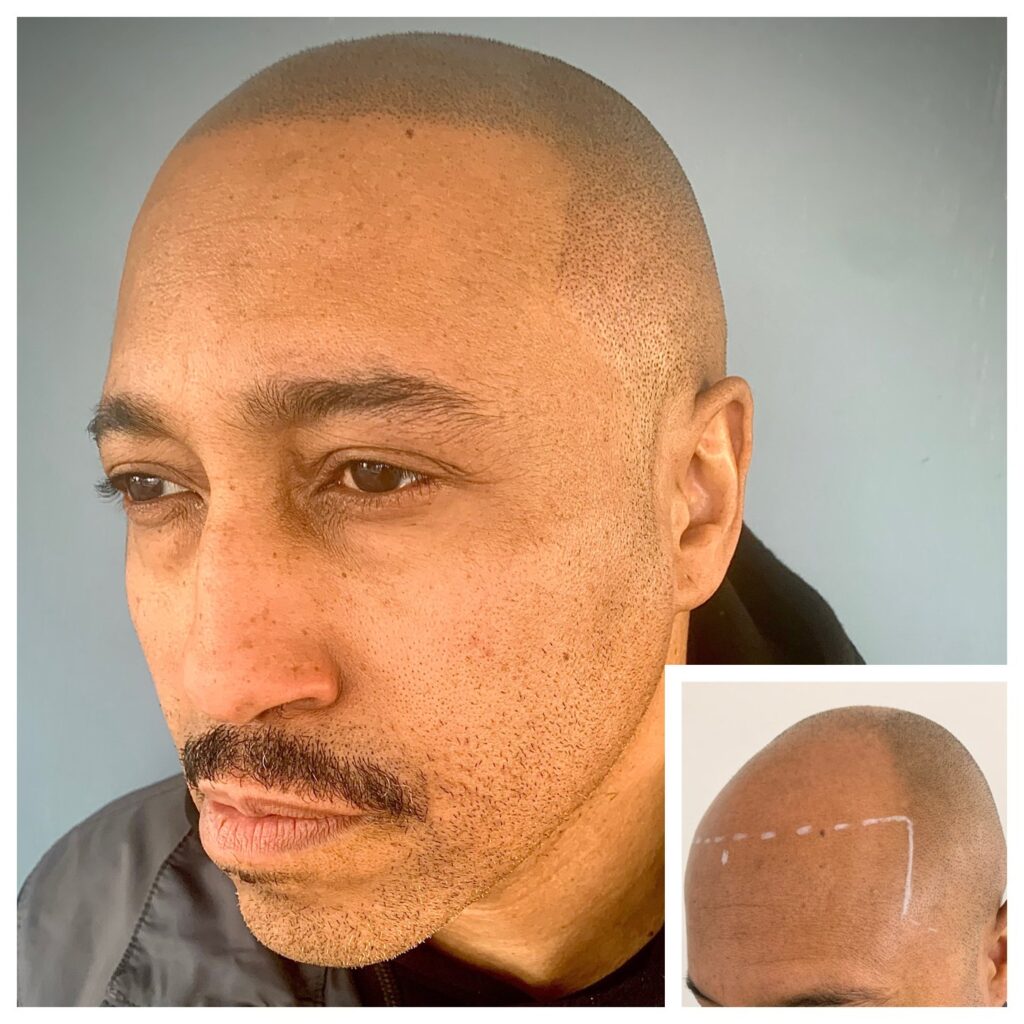
Yes, scalp micropigmentation can look natural up close when the pigment color, dot size, spacing, depth and hairline are carefully planned. It should resemble tiny follicle shadows rather than a solid painted layer. The closest view will still show that it is cosmetic pigmentation, but it should blend convincingly with your hair and skin.
What should natural looking SMP look like up close?
When I create scalp micropigmentation, I am not trying to draw individual hairs or cover the scalp with one flat color. I place small pigment impressions that reduce the contrast between the scalp and the hair. The result is a visual impression of follicles, either beneath existing hair or across a shaved scalp.
Up close, realistic SMP should have subtle variation. The impressions should not all be identical in size, spacing or intensity. A completely even grid can look artificial because natural follicles do not grow in a perfectly measured pattern. Density should also change across the scalp, according to the hair that is already present and the appearance we are trying to create.
It is important to set a realistic expectation. SMP does not grow hair and it cannot reproduce a real follicle under magnification. It is a cosmetic tattoo treatment that creates the appearance of fuller hair or a closely shaved head. Some scalp showing through is normal. The goal is not a fully painted, opaque scalp.
Why does the hairline matter so much?
For many clients, the hairline is the first place they look when judging whether an SMP result feels authentic. I design it around facial structure, age, existing hair and the chosen style. A hairline that is too low, too straight or identical from one side to the other can make the whole result look less natural, even when the rest of the work is carefully placed.
A convincing hairline usually has a soft, irregular edge rather than a hard border. The transition from pigment to untreated skin should be gradual. I also consider how the result will relate to your future hairstyle and any remaining hair, because the design needs to make sense beyond the appointment itself.
If you are considering a shaved look, you may want to review my shaved head SMP results. If you keep hair, the approach is different. Pigment can be placed between existing strands to reduce visible scalp and suggest greater density, without requiring the same full shaved appearance.

How do pigment color and placement affect realism?
The right shade is not necessarily the darkest shade available. Too much contrast can make the scalp appear shaded rather than naturally covered.
This matters particularly when your hair is gray, light, or changing over time. A plan that suits very dark hair may not be appropriate if more gray appears later. We discuss how the color relates to your current appearance, rather than assuming that one pigment choice works for everyone.
Placement depth also matters. SMP is intended to sit in the epidermal and upper dermal layers. If pigment is placed too shallowly, it may fade quickly. If it is placed too deeply, it can spread and lose the crisp, follicle like appearance that makes the result believable. Careful placement, controlled density and a zero bleeding approach are essential to the finished look.
My background in photography and makeup has shaped how I assess color, proportion and the way light changes what we see. I was trained in SMP in Los Angeles, and I bring that visual discipline into the consultation and design process. The work still has to be technically sound, but it also has to look right in ordinary lighting, not only in a carefully chosen photograph.
Will female density SMP look natural close up?
Female SMP and male density work require particular care because the hair is often still present. The objective is usually to reduce scalp show through, not to create a shaved head. I work around the existing hair and use a lighter, more considered density plan so the pigment supports the natural pattern instead of competing with it.
Female SMP and male density always take a minimum of three sessions, and sometimes four. Building the result gradually allows me to assess how the pigment is settling and allows me to assess how the pigment is settling before adding more. This is one reason I do not recommend judging the final appearance immediately after the first session.
If you are investigating this option for diffuse thinning, it is also sensible to have the cause of hair loss assessed. Before treating suspected female pattern hair loss, blood tests may be needed to exclude other diseases, metabolic conditions or hormone imbalances that can produce a similar pattern. SMP camouflages visible contrast, but it does not diagnose or treat the underlying cause.
How can I judge whether an SMP result is realistic?
Start with healed photographs, not only fresh work. Immediately after treatment, the pigment can look darker and stronger. During healing it normally lightens, and mild flaking or scabbing may occur. The scalp should be assessed after it has settled, ideally in several types of lighting and from more than one angle.
When reviewing a portfolio, look closely at the hairline, temples, crown and areas where pigment meets existing hair. Ask whether the images show density work if that is what you need. A shaved head example does not automatically demonstrate the skills required to work between longer strands.
You should also ask practical questions before booking. Confirm that the practitioner has SMP specific training, a body art practitioner licence, bloodborne pathogens certification and the relevant county health permit. The studio should be clean, and needles should be packaged and opened in front of you. Gloves, masks, barrier protection and device guards are appropriate safety measures. Disclose allergies and relevant skin conditions, including active eczema, psoriasis or a history of keloid scarring.
At Precision Scalp in Oak Brook, I use consultation time to discuss your hair loss pattern, expectations, skin and lifestyle. I also use numbing medicine during treatment. You can read more about my approach to scalp micropigmentation for men, or contact the studio through the Precision Scalp contact page if you would like to ask about an assessment.
What helps SMP stay natural after treatment?
After each session, keep the scalp dry, avoid shampoo, sweating, heavy exercise, steam rooms and hot showers during the early healing period, and protect it from sun exposure. Do not pick at scabs or interfere with the skin while it settles. Follow the aftercare instructions given for your treatment.
As a general guide, days one to four involve keeping the scalp dry and avoiding shaving. From days five to ten, gentle washing can usually resume, while sun exposure should still be avoided. Around day ten, normal grooming and scalp SPF can resume if healing is progressing normally. Swimming pools should be avoided until I confirm the scalp has healed, and healing times vary from person to person.
Once healed, broad spectrum sunscreen helps protect the pigment from UV exposure. SMP is intended to be long lasting, but it gradually fades as skin renews and may eventually need a touch up. Skin type, sun exposure, lifestyle and individual healing all influence how it looks over time.
If you want scalp micropigmentation that looks natural, I recommend choosing the practitioner whose healed hairlines and density work you can inspect closely, then making the decision after a thorough consultation. You are welcome to book a consultation when you feel ready.
Frequently asked questions
Can people tell that SMP is not real hair when they stand close to me?
They may recognize that the scalp has been cosmetically treated if they inspect it closely, particularly under strong light. Natural looking SMP is not intended to be indistinguishable from real follicles at every distance. Its purpose is to blend with your hair and reduce visible contrast during normal conversation and everyday viewing.
Does SMP look natural with longer hair?
It can, provided the treatment is planned as density work rather than a shaved head design. Pigment is placed between existing hairs to reduce scalp show through. The hair color, thickness, loss pattern and styling all affect the plan, so I assess how your preferred hairstyle will sit over the treated area.
Will SMP look natural if my hair is gray?
Gray hair needs thoughtful color matching because very dark pigment can create too much contrast beside silver or white strands. I consider your current follicle color, skin tone and likely changes over time. The aim is a soft blend that supports your appearance rather than making the treated scalp look unusually dark.
Can an unnatural SMP hairline be corrected?
The correction options depend on the pigment color, placement, density, age of the work and your skin. Whether a correction is possible depends on the individual case, and I assess it in person. A consultation and close review of healed work are necessary before anyone can responsibly suggest a correction plan.
Does SMP look darker before it looks natural?
Yes, fresh SMP commonly appears darker or more intense than the healed result. The skin then settles, and the color normally softens as healing progresses. Mild flaking or light scabbing can occur. Do not pick or scratch the area, and contact your practitioner if healing differs substantially from what was explained.
Can SMP be natural on a scar or alopecia area?
It can camouflage some scars and forms of alopecia, but scarred or altered skin may hold pigment differently from healthy scalp. The result may require a more cautious plan and realistic expectations about retention and blending. I assess the area first and will discuss whether the proposed improvement is suitable.
How should I shave my scalp after SMP?
Clients with advanced hair loss often maintain a fully shaved look using a razor, rotary shaver or foil shaver. If you have remaining hair, a fine stubble length maintained with clippers or a trimmer may blend more naturally. Your practitioner can discuss grooming once the scalp has fully healed.