
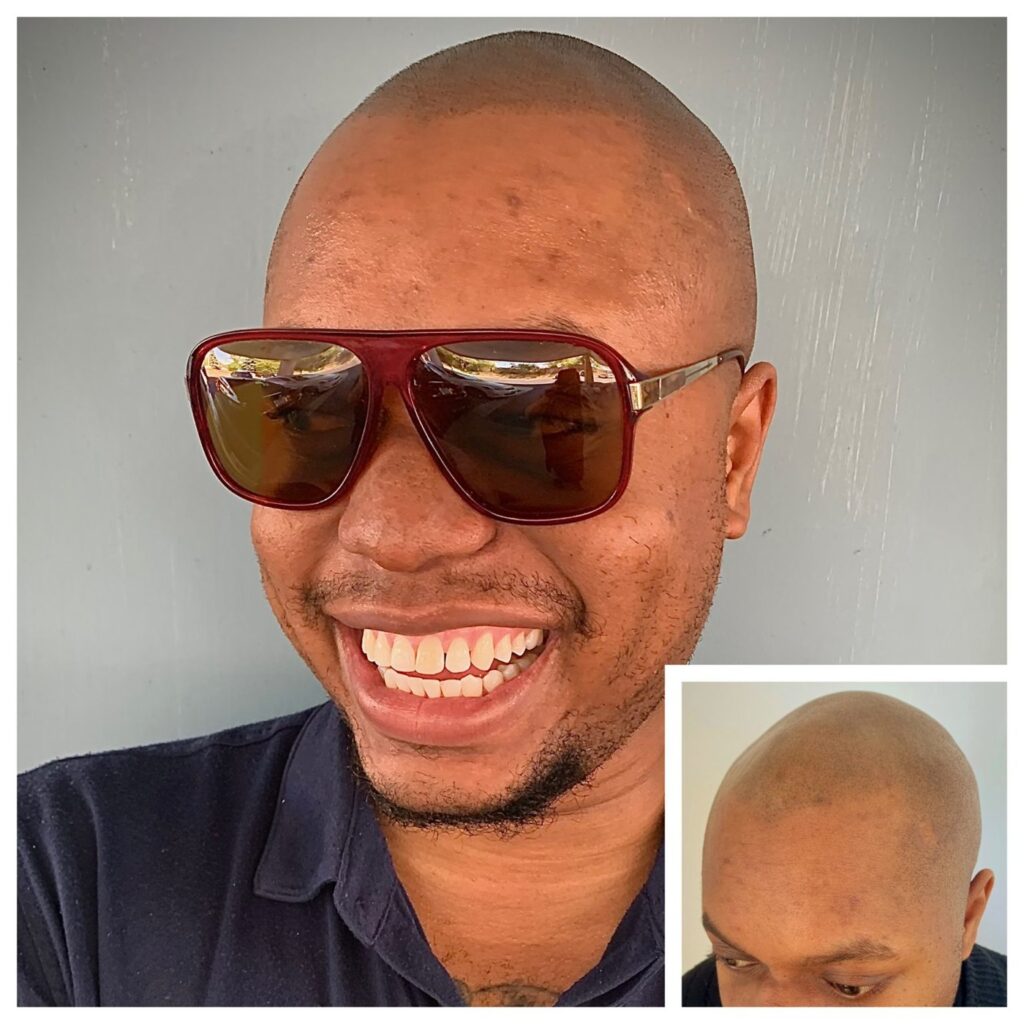
Does scalp micropigmentation hurt? Not much. It is usually mildly uncomfortable rather than painful. Most clients feel a light scratching or tapping sensation, and I use numbing medicine to improve comfort. Sensitivity varies by person and scalp area, but discomfort is generally temporary and should not be severe during a carefully performed session.
Why does SMP feel uncomfortable?
Scalp micropigmentation uses a fine needle to place tiny amounts of pigment in the upper layers of the scalp. That creates a sensation, but it is not the same as a surgical procedure. Most people describe the feeling as light scratching, tapping or pressure rather than sharp pain.
Your SMP pain level depends on your individual sensitivity, the condition of your scalp and the area being treated. Some parts of the scalp can feel more noticeable than others, particularly around the temples, hairline or areas where there is little natural hair. A person who has had tattoos may find the sensation familiar, although SMP is often experienced as gentler.
I use numbing medicine during treatment to help you remain comfortable. I also work carefully and check in with you throughout the appointment. You should tell me if you are uncomfortable, rather than trying to tolerate more than you need to.
What happens before and during an SMP session?
Before treatment, wash your hair and scalp. During the consultation, I assess your scalp, discuss your goals and agree on the areas to be treated. If you have a fully shaved scalp, we discuss a hairline that suits your facial structure and age.
I match the pigment to your current hair follicle color and plan the placement so it supports the appearance of natural density. SMP is not designed to make the scalp look like a solid painted surface. A realistic result allows some scalp to show through and uses carefully layered impressions to reduce the contrast between your hair and scalp.
I apply numbing medicine before beginning. The treatment itself involves placing many small pigment impressions rather than drawing continuous lines. You can normally communicate with me during the session, take suitable breaks and let me know how the area feels.
The length of an appointment varies with the size and complexity of the treatment area. A complete course commonly involves several sessions, with each session allowing the scalp to settle before further pigment is added. At Precision Scalp, female SMP and male density require a minimum of three sessions, and sometimes four. This staged approach helps me assess how the pigment heals and refine the result progressively.
Is SMP painful after the appointment?
It is normal for the scalp to feel tender or sensitive after treatment. You may also notice temporary redness. This should be manageable, but severe or worsening pain is not something to dismiss as ordinary healing.
For the first few days, keep the scalp dry. That means avoiding shampoo, swimming, heavy exercise, saunas, steam rooms and hot showers that make you sweat. Do not shave or pick at the treated skin, and follow the aftercare guidance I give you. A shower cap can help you keep the area dry while bathing.
From around days five to ten, follow the washing instructions I give you and be gentle with the scalp. Avoid direct sun while the area is settling. From about day ten, normal grooming and sunscreen can usually resume, following the personalised aftercare guidance I give you. Healing takes a few weeks, and I will tell you what to expect at each stage, and the color may look lighter during healing before it settles.
Aftercare is not just about comfort. It helps protect the pigment placement and supports a softer, more even healed appearance. I will explain what to do for your scalp and tell you what changes are expected at each stage.
How can I reduce the risk of a painful or poor experience?
Start by choosing an experienced, licensed SMP practitioner and reviewing real, healed examples of their work. I recommend paying particular attention to hairlines. A poorly executed hairline can make the result look unnatural, so this is an important part of your consultation.
Before booking, ask to verify SMP-specific training, a body art practitioner licence, bloodborne pathogens certification and the relevant county health permit. The studio should be clean and sterile, with packaged needles opened in front of you and appropriate barrier protection, including gloves, a mask, barrier tape and device guards.
Tell me about allergies, skin conditions, medications and any previous reactions before treatment. Tell me about any known pigment or ink sensitivity, and we can discuss whether a patch test is appropriate. Anyone with active eczema or psoriasis, or a history of keloid scarring, should consult a dermatologist before booking.
If you are considering treatment for female pattern hair loss, it is sensible to establish the cause of the hair loss first. Blood tests may be needed to rule out other diseases, metabolic conditions or hormone imbalances that can create a similar pattern. SMP camouflages visible thinning, but it does not grow hair or treat the underlying cause.
When should discomfort be treated as a warning sign?
Some redness, tenderness and mild sensitivity can occur after scalp micropigmentation. Contact me if you experience unusual discomfort, excessive swelling or redness, or anything that concerns you beyond what we discussed during consultation.
Contact your healthcare provider if you develop fever, pus or drainage, severe pain, severe redness or significant swelling. These symptoms may indicate infection and should be assessed promptly rather than managed only with routine aftercare.
You can read more about possible SMP side effects and risks before making your decision. I want you to understand both the comfort level and the responsibilities involved in a cosmetic tattoo procedure.
Is SMP suitable for your type of hair loss?
SMP may help create the appearance of density between existing hairs, support a fine stubble look or complement a fully shaved style. Precision Scalp offers treatments for male density, female hair loss, alopecia, scars, repair and shaved scalp results. The right approach depends on your remaining hair, scalp condition, hair-loss pattern and expectations.
If you still have hair in the treated area, a short, fine stubble length can help blend the impressions with your natural follicles. With more advanced hair loss, a fully shaved look may provide the most consistent visual balance. I will discuss this during consultation rather than assuming one finish suits everyone.
For readers considering a male density treatment, my scalp micropigmentation for men service page explains that option in more detail. You can also find studio information and arrange a consultation through the Precision Scalp contact page in Oak Brook, Illinois.
My aim is for you to know what the procedure feels like, how your scalp should be cared for and what a natural result can realistically involve before you commit. If you would like to discuss your scalp and comfort concerns, you are welcome to book a consultation.
Frequently asked questions
Does SMP hurt more on a bald scalp?
Not necessarily. A bald scalp may make the treatment area more exposed, but comfort still depends on personal sensitivity, skin condition and location. The temples and hairline can feel more noticeable for some people. I use numbing medicine and adjust the pace when needed, so tell me immediately if the sensation becomes uncomfortable.
Can I take pain medicine before scalp micropigmentation?
Do not take medication specifically for the procedure without checking that it is appropriate for you. Some medicines and supplements can affect bleeding or skin response. Tell me about everything you take during consultation, including prescribed medicines, over-the-counter products and supplements, so we can plan safely.
Does male density SMP feel different from a shaved-head treatment?
The sensation is generally similar because both treatments use small pigment impressions in the scalp. The experience can vary with the size of the area, existing hair and scalp sensitivity. Male density work is performed between existing hairs, while a shaved treatment focuses on creating an even follicle-shadow appearance across the visible scalp.
Will SMP hurt more if I have sensitive skin?
Sensitive skin can make treatment feel more noticeable, but it does not automatically mean SMP will be painful. I assess your scalp before proceeding and use numbing medicine. If you have active eczema, psoriasis, unusual scalp irritation or a history of abnormal scarring, discuss suitability before booking.
Can I wear a hat after scalp micropigmentation?
Ask your practitioner before covering the treated area. Early aftercare usually focuses on keeping the scalp dry, clean according to instructions and protected from sun, while avoiding friction and pressure. A loose, clean covering may sometimes be appropriate, but it should not rub against or trap heat on healing skin.
Does laser removal of SMP hurt?
Laser removal is a separate procedure with its own sensation, aftercare and risks. Whether removal is needed depends on the healed result and your circumstances. Because removal can be more difficult when the original pigment was placed incorrectly, choosing an experienced practitioner and discussing long-term decisions before treatment is important.
Can SMP cause pain during an MRI scan?
Some tattoo and cosmetic pigments may contain metals that can cause warmth, discomfort or swelling during an MRI scan. Tell your healthcare team that you have scalp micropigmentation before imaging. They can advise you based on the scan and the information available about the pigment used.